creators · 4 min read · 2026-10-21
Can You Get Paid to Read Books? 9 Real Ways (Honestly)

"Get paid to read books" sounds like a scam headline, and to be fair, a lot of the time it is. But there are real ways book lovers earn money from reading. Most of them are less "lie in bed with a novel and collect a paycheck" and more "build a small bookish business around what you love." Here's the honest version: nine real ways, what they involve, and how to avoid the sketchy stuff.
A quick honesty note: none of these are guaranteed income. Most people earn small amounts at first and grow slowly. Anyone promising you thousands a month for reading is selling something.
1. Affiliate links
You share a link to a book or bookish product, a reader buys it, and you earn a small commission. Bookshop.org has an affiliate program that supports indie bookstores, and many online stores run their own.
- Audience needed: any size
- Effort: low
- Good for: bloggers, bookstagrammers, BookTokers, newsletters
- Remember: always disclose affiliate links clearly ("I earn a small commission if you buy through my link").
2. UGC (user-generated content)
Brands pay creators to make photos or short videos they can use in their own ads and social posts. You don't need a big following, because the brand posts the content, not you. Bookish brands (candles, book sleeves, reading lamps, subscription boxes) are a natural fit.
- Audience needed: none, but you need a portfolio of nice content
- Effort: medium
- Start by: shooting a few sample flatlays and short videos to show your style
3. Brand deals and sponsored posts
Once you have an engaged audience on Instagram, TikTok or YouTube, brands may pay you to feature their product. Engagement and a clear niche matter more than raw follower count.
- Audience needed: usually a few thousand engaged followers or more
- Effort: medium to high
- You'll need: a simple media kit with your niche, audience and example posts
4. Selling your own bookish products
Printables, digital planners, reading journals, bookmarks, Canva templates. You make them once and sell them many times. (Yes, this is what we do.) It takes upfront work, but it's the closest thing to income that grows while you read.
- Audience needed: any, though Pinterest and a newsletter help a lot
- Effort: high upfront, lower over time
5. Paid book reviews (carefully)
Some websites and publications pay for reviews, and some services pay readers to review indie books. Be careful: platforms like Amazon ban paid reviews, and paying for a positive review is a big no. Look for editorial roles where you're paid to write an honest review for a publication, not for a rating.
6. Beta reading and sensitivity reading
Authors pay beta readers to give feedback on manuscripts before publication. Sensitivity readers give feedback on representation from lived experience. You'll need to write clear, kind, useful notes.
- Effort: medium to high (it's real editorial work)
- Start by: beta reading for free for a few indie authors to build testimonials
7. Audiobook narration
If you have a great reading voice and a quiet space, narration is real, paid work. Expect to learn recording and editing, and to invest in a decent microphone.
- Effort: high
- Good for: people with acting or voice experience
8. Bookstagram or BookTok creator funds and subscriptions
Some platforms pay creators through bonuses, subscriptions or ad revenue sharing. These programs change often and have eligibility rules, so treat them as a bonus, not a plan.
9. Hosting paid book club events
Love hosting? Run ticketed book club nights, silent reading parties or readathons at a café or bookstore. Partner with the venue, charge a small ticket fee that includes a drink, and bring printables to make it feel special.
How to start (without burning out)
- Pick one or two methods. Affiliate links plus UGC is a gentle start.
- Pick a niche. "Cozy fantasy for busy moms" is easier to grow than "books."
- Show up consistently. Three posts a week beats ten posts in one week and then silence.
- Track what you earn. Even small wins are motivating.
- Stay honest. Disclose ads and affiliate links every time. Your audience trusts you, and that's the whole business.
Want the full roadmap?
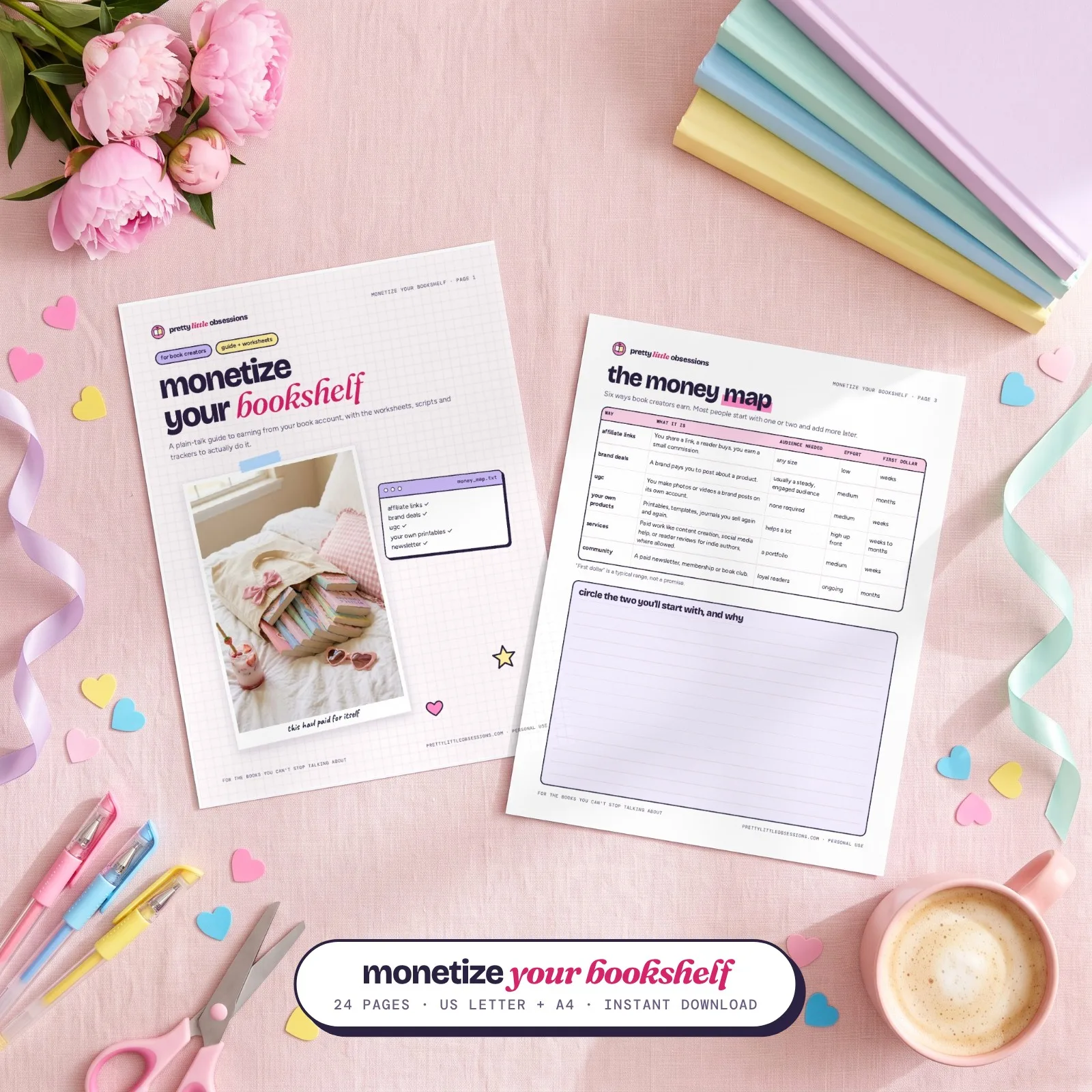
Monetize Your Bookshelf is our 24-page printable guide and workbook for book creators. It maps the ways book accounts earn and helps you find where you are now, then walks through affiliate links and disclosure, a media kit, rates and brand pitches, ARCs and publisher relationships, making your own printables, Pinterest and newsletters, a money tracker and a 30-day action plan. No income promises, just a clear plan.
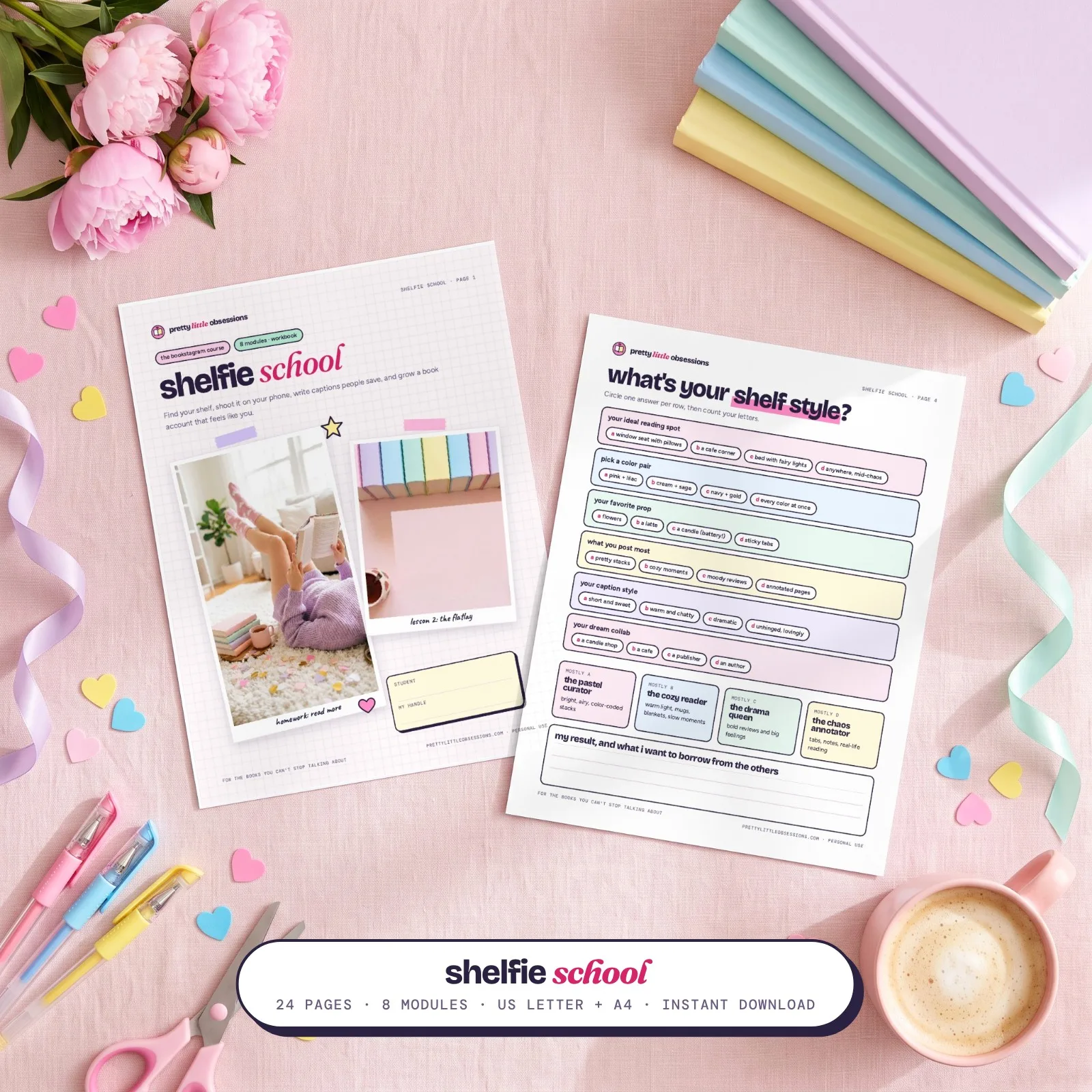
Building your account first? Start with our guide on how to start a bookstagram, or join Shelfie School, our 8-module bookstagram workbook.