reading-life · 3 min read · 2026-10-21
How to Annotate Books: Annotation Key, Tabs + Ideas
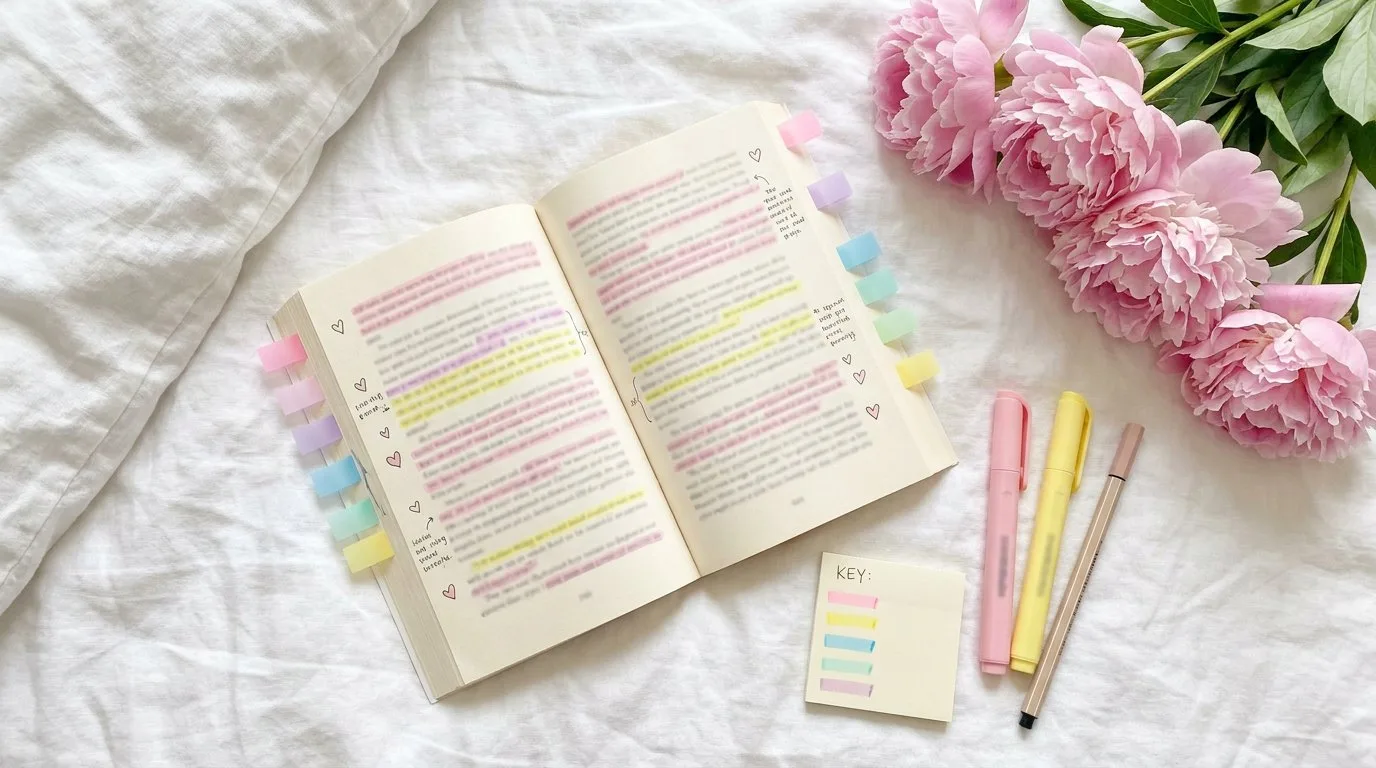
Annotating books is how you turn a paperback into a love letter. Those rainbow-tabbed books you see on BookTok aren't just pretty. They're a record of every gasp, swoon and "WHAT?!" you had while reading. Here's how to annotate books for fun, with a simple annotation key you can copy today.
What does it mean to annotate a book?
Annotating means marking up a book as you read: highlighting lines, writing notes in the margins, adding sticky tabs for favorite moments. School might have made it feel like work, but reading-for-fun annotation is all about your reactions. There are no wrong answers. "LOL" in the margin is a valid annotation.
What you need
- Highlighters. Mild or pastel ones won't bleed through thin pages. Test on the last blank page first.
- Sticky tabs. Small transparent tabs in several colors.
- A fine pen or pencil. Gel pens smudge; erasable pens are great for nervous beginners.
- Optional: sticky notes for longer thoughts, a ruler for straight underlines.
Make an annotation key
An annotation key is a little legend that says what each color means. Keep it simple, four to six colors at most, or you'll spend the whole book deciding which pen to use.
Here's a starter annotation key you can copy:
| Color | Meaning |
|---|---|
| Pink | Romance, swoons, yearning |
| Yellow | Favorite quotes and pretty writing |
| Blue | Plot twists and clues |
| Green | Funny moments |
| Purple | Worldbuilding and lore |
| Red | Anger, betrayal, "how DARE you" |
Write your key on a sticky note inside the front cover, or tape a printed one there. Some readers also add a tab color for "spice" and one for "this made me cry."
What to write in the margins
Margin notes are where your personality comes out. Try:
- Reactions: "NO." "Called it." "Not him being sweet."
- Predictions you can check later.
- Questions you want to bring to book club.
- Little doodles: hearts, skulls, flames, crying faces.
- Connections to other books or characters.
How to annotate without ruining a book
Some people can't bear to write in a book (respect). You can still annotate:
- Use only sticky tabs and sticky notes. Fully removable.
- Use transparent sticky notes over the text, and write on those.
- Annotate in a journal instead, with page numbers. A reading journal with a quote collector is perfect.
- Never annotate library books. The librarian will find you.
Annotating for book club
Annotations make book club easier. Tab the moments you want to discuss in one color, and you'll arrive with ready-made talking points. Some clubs even do an "annotation swap," where everyone shares a favorite tabbed passage (it's one of our favorite book club activities).
You can also annotate a book for a friend: fill it with notes and reactions, then gift it. It's the most personal bookish gift there is (more ideas in our bookish gift guide).
Book annotation ideas to try
- A "first read" color and a different "reread" color, to see how your opinion changes.
- A tiny emoji code: ⭐ favorite line, 💀 dead, 🔥 spicy, 😭 crying.
- A "tally" in the back cover for how many times a character says a certain phrase.
- A five-word summary at the end of each chapter.
- A rating for every chapter, then a final rating on the inside back cover.
Keep your annotations organized
Once you're a tabbing person, you'll want somewhere to keep the best bits. The Shelf Diary has a quote collector, character tracker and a review page for every book, and the free Feral Night Starter Pack includes printable bookmarks to keep your place between tabs.